In machine learning, a neural field (also known as implicit neural representation, neural implicit, or coordinate-based neural network), is a mathematical field that is fully or partially parametrized by a neural network. Initially developed to tackle visual computing tasks, such as rendering or reconstruction (e.g., neural radiance fields), neural fields emerged as a promising strategy to deal with a wider range of problems, including surrogate modelling of partial differential equations, such as in physics-informed neural networks. Differently from traditional machine learning algorithms, such as feed-forward neural networks, convolutional neural networks, or transformers, neural fields do not work with discrete data (e.g. sequences, images, tokens), but map continuous inputs (e.g., spatial coordinates, time) to continuous outputs (i.e., scalars, vectors, etc.). This makes neural fields not only discretization independent, but also easily differentiable. Moreover, dealing with continuous data allows for a significant reduction in space complexity, which translates to a much more lightweight network. == Formulation and training == According to the universal approximation theorem, provided adequate learning, sufficient number of hidden units, and the presence of a deterministic relationship between the input and the output, a neural network can approximate any function to any degree of accuracy. Hence, in mathematical terms, given a field y = Φ ( x ) {\textstyle {\boldsymbol {y}}=\Phi ({\boldsymbol {x}})} , with x ∈ R n {\displaystyle {\boldsymbol {x}}\in \mathbb {R} ^{n}} and y ∈ R m {\displaystyle {\boldsymbol {y}}\in \mathbb {R} ^{m}} , a neural field Ψ θ {\displaystyle \Psi _{\theta }} , with parameters θ {\displaystyle {\boldsymbol {\theta }}} , is such that: Ψ θ ( x ) = y ^ ≈ y {\displaystyle \Psi _{\theta }({\boldsymbol {x}})={\hat {\boldsymbol {y}}}\approx {\boldsymbol {y}}} === Training === For supervised tasks, given N {\displaystyle N} examples in the training dataset (i.e., ( x i , y i ) ∈ D t r a i n , i = 1 , … , N {\displaystyle ({\boldsymbol {x_{i}}},{\boldsymbol {y_{i}}})\in {\mathcal {D_{train}}},i=1,\dots ,N} ), the neural field parameters can be learned by minimizing a loss function L {\displaystyle {\mathcal {L}}} (e.g., mean squared error). The parameters θ ~ {\displaystyle {\tilde {\theta }}} that satisfy the optimization problem are found as: θ ~ = argmin θ 1 N ∑ ( x i , y i ) ∈ D t r a i n L ( Ψ θ ( x i ) , y i ) {\displaystyle {\tilde {\boldsymbol {\theta }}}={\underset {\boldsymbol {\theta }}{\text{argmin}}}\;{\frac {1}{N}}\sum _{({\boldsymbol {x_{i}}},{\boldsymbol {y_{i}}})\in {\mathcal {D_{train}}}}{\mathcal {L}}(\Psi _{\theta }({\boldsymbol {x}}_{i}),{\boldsymbol {y}}_{i})} Notably, it is not necessary to know the analytical expression of Φ {\displaystyle \Phi } , for the previously reported training procedure only requires input-output pairs. Indeed, a neural field is able to offer a continuous and differentiable surrogate of the true field, even from purely experimental data. Moreover, neural fields can be used in unsupervised settings, with training objectives that depend on the specific task. For example, physics-informed neural networks may be trained on just the residual. === Spectral bias === As for any artificial neural network, neural fields may be characterized by a spectral bias (i.e., the tendency to preferably learn the low frequency content of a field), possibly leading to a poor representation of the ground truth. In order to overcome this limitation, several strategies have been developed. For example, SIREN uses sinusoidal activations, while the Fourier-features approach embeds the input through sines and cosines. == Conditional neural fields == In many real-world cases, however, learning a single field is not enough. For example, when reconstructing 3D vehicle shapes from Lidar data, it is desirable to have a machine learning model that can work with arbitrary shapes (e.g., a car, a bicycle, a truck, etc.). The solution is to include additional parameters, the latent variables (or latent code) z ∈ R d {\displaystyle {\boldsymbol {z}}\in \mathbb {R} ^{d}} , to vary the field and adapt it to diverse tasks. === Latent code production === When dealing with conditional neural fields, the first design choice is represented by the way in which the latent code is produced. Specifically, two main strategies can be identified: Encoder: the latent code is the output of a second neural network, acting as an encoder. During training, the loss function is the objective used to learn the parameters of both the neural field and the encoder. Auto-decoding: each training example has its own latent code, jointly trained with the neural field parameters. When the model has to process new examples (i.e., not originally present in the training dataset), a small optimization problem is solved, keeping the network parameters fixed and only learning the new latent variables. Since the latter strategy requires additional optimization steps at inference time, it sacrifices speed, but keeps the overall model smaller. Moreover, despite being simpler to implement, an encoder may harm the generalization capabilities of the model. For example, when dealing with a physical scalar field f : R 2 → R {\displaystyle f:\mathbb {R} ^{2}\rightarrow \mathbb {R} } (e.g., the pressure of a 2D fluid), an auto-decoder-based conditional neural field can map a single point to the corresponding value of the field, following a learned latent code z {\displaystyle {\boldsymbol {z}}} . However, if the latent variables were produced by an encoder, it would require access to the entire set of points and corresponding values (e.g. as a regular grid or a mesh graph), leading to a less robust model. === Global and local conditioning === In a neural field with global conditioning, the latent code does not depend on the input and, hence, it offers a global representation (e.g., the overall shape of a vehicle). However, depending on the task, it may be more useful to divide the domain of x {\displaystyle {\boldsymbol {x}}} in several subdomains, and learn different latent codes for each of them (e.g., splitting a large and complex scene in sub-scenes for a more efficient rendering). This is called local conditioning. === Conditioning strategies === There are several strategies to include the conditioning information in the neural field. In the general mathematical framework, conditioning the neural field with the latent variables is equivalent to mapping them to a subset θ ∗ {\displaystyle {\boldsymbol {\theta }}^{}} of the neural field parameters: θ ∗ = Γ ( z ) {\displaystyle {\boldsymbol {\theta }}^{}=\Gamma ({\boldsymbol {z}})} In practice, notable strategies are: Concatenation: the neural field receives, as input, the concatenation of the original input x {\displaystyle {\boldsymbol {x}}} with the latent codes z {\displaystyle {\boldsymbol {z}}} . For feed-forward neural networks, this is equivalent to setting θ ∗ {\displaystyle {\boldsymbol {\theta }}^{}} as the bias of the first layer and Γ ( z ) {\displaystyle \Gamma ({\boldsymbol {z}})} as an affine transformation. Hypernetworks: a hypernetwork is a neural network that outputs the parameters of another neural network. Specifically, it consists of approximating Γ ( z ) {\displaystyle \Gamma ({\boldsymbol {z}})} with a neural network Γ ^ γ ( z ) {\displaystyle {\hat {\Gamma }}_{\gamma }({\boldsymbol {z}})} , where γ {\displaystyle {\boldsymbol {\gamma }}} are the trainable parameters of the hypernetwork. This approach is the most general, as it allows to learn the optimal mapping from latent codes to neural field parameters. However, hypernetworks are associated to larger computational and memory complexity, due to the large number of trainable parameters. Hence, leaner approaches have been developed. For example, in the Feature-wise Linear Modulation (FiLM), the hypernetwork only produces scale and bias coefficients for the neural field layers. === Meta-learning === Instead of relying on the latent code to adapt the neural field to a specific task, it is also possible to exploit gradient-based meta-learning. In this case, the neural field is seen as the specialization of an underlying meta-neural-field, whose parameters are modified to fit the specific task, through a few steps of gradient descent. An extension of this meta-learning framework is the CAVIA algorithm, that splits the trainable parameters in context-specific and shared groups, improving parallelization and interpretability, while reducing meta-overfitting. This strategy is similar to the auto-decoding conditional neural field, but the training procedure is substantially different. == Applications == Thanks to the possibility of efficiently modelling diverse mathematical fields with neural networks, neural fields have been applied to a wide range of problems: 3D scene reconstruction: neural fields can be used to model t
Graphics processing unit
A graphics processing unit (GPU) is a specialized electronic circuit designed for digital image processing and to accelerate computer graphics, being present either as a component on a discrete graphics card or embedded on motherboards, mobile phones, personal computers, workstations, and game consoles. GPUs are increasingly being used for artificial intelligence (AI) processing due to linear algebra acceleration, which is also used extensively in graphics processing. Although there is no single definition of the term, and it may be used to describe any video display system, in modern use a GPU includes the ability to internally perform the calculations needed for various graphics tasks, like rotating and scaling 3D images, and often the additional ability to run custom programs known as shaders. This contrasts with earlier graphics controllers known as video display controllers which had no internal calculation capabilities, or blitters, which performed only basic memory movement operations. The modern GPU emerged during the 1990s, adding the ability to perform operations like drawing lines and text without CPU help, and later adding 3D functionality. Graphics functions are generally independent and this lends these tasks to being implemented on separate calculation engines. Modern GPUs include hundreds, or thousands, of calculation units. This made them useful for non-graphic calculations involving embarrassingly parallel problems due to their parallel structure. The ability of GPUs to rapidly perform vast numbers of calculations has led to their adoption in diverse fields including artificial intelligence (AI) where they excel at handling data-intensive and computationally demanding tasks. Other non-graphical uses include the training of neural networks and cryptocurrency mining. == History == === 1960s === Dedicated 3D graphics hardware dates back to graphic terminals such as the Adage AGT-30 from 1967 with analog matrix processors. In 1969 Evans & Sutherland (E&S) introduced the Line Drawing System-1 (LDS-1), which was the first all-digital system to provide matrix multiplication. Also in 1969, the low-cost graphics terminal IMLAC PDS-1 was introduced. It later saw use as an early 3D gaming machine with the likes of Maze War. === 1970s === In professional hardware, in 1972 PLATO IV system becomes operational at the University of Illinois Urbana-Champaign. Between around 1973 and 1978, several networked multiplayer wireframe 3D games are implemented and popularized by users of the system. Also in 1972, the E&S Continuous Tone 1 (CT1) "Watkins box" system (consisting of an E&S LDS-2 and Shaded Picture System) is delivered to Case Western Reserve University. It offered the first real-time Gouraud shading. In 1975, a joint effort between Evans & Sutherland Computer Corporation and the University of Utah's computer graphics department results in the first ever MOSFET video framebuffer, capable of color and smooth shading. E&S Continuous Tone 3 (CT3) system was delivered in 1977 to Lufthansa for pilot training using computer simulation. It was the first graphics system capable of real-time texture mapping. Ikonas made graphics systems with 8- and 24-bit graphics and 3D acceleration in the late 70s. Arcade system boards have used specialized 2D graphics circuits since the 1970s. In early video game hardware, RAM for frame buffers was expensive, so video chips composited data together as the display was being scanned out on the monitor. A specialized barrel shifter circuit helped the CPU animate the framebuffer graphics for various 1970s arcade video games from Midway and Taito, such as Gun Fight (1975), Sea Wolf (1976), and Space Invaders (1978). The Namco Galaxian arcade system in 1979 used specialized graphics hardware that supported RGB color, multi-colored sprites, and tilemap backgrounds. The Galaxian hardware was widely used during the golden age of arcade video games, by game companies such as Namco, Centuri, Gremlin, Irem, Konami, Midway, Nichibutsu, Sega, and Taito. The Atari 2600 in 1977 used a video shifter called the Television Interface Adaptor. Atari 8-bit computers (1979) had ANTIC, a video processor which interpreted instructions describing a "display list"—the way the scan lines map to specific bitmapped or character modes and where the memory is stored (so there did not need to be a contiguous frame buffer). 6502 machine code subroutines could be triggered on scan lines by setting a bit on a display list instruction. ANTIC also supported smooth vertical and horizontal scrolling independent of the CPU. === 1980s === In the 1980s significant advancements were made in professional 3D graphics hardware. Perhaps most impactful was the 1981 development of the Geometry Engine, a VLSI vector processor ASIC designed by Jim Clark and Marc Hannah at Stanford University. This processor is the forerunner of modern tensor cores and other similar processors marketed for graphics and AI. The Geometry Engine went on to be used in Silicon Graphics workstations for many years. Silicon Graphics's first product, shipped in November 1983, was the IRIS 1000, a terminal with hardware-accelerated 3D graphics based on the Geometry Engine. The Geometry Engine was capable of approximately 6 million operations per second. The 1981 NEC μPD7220 was the first implementation of a personal computer graphics display processor as a single large-scale integration (LSI) integrated circuit chip. This enabled the design of low-cost, high-performance video graphics cards such as those from Number Nine Visual Technology. It became the best-known GPU until the mid-1980s. It was the first fully integrated VLSI (very large-scale integration) metal–oxide–semiconductor (NMOS) graphics display processor for PCs, supported up to 1024×1024 resolution, and laid the foundations for the PC graphics market. It was used in a number of graphics cards and was licensed for clones such as the Intel 82720, the first of Intel's graphics processing units. The Williams Electronics arcade games Robotron: 2084, Joust, Sinistar, and Bubbles, all released in 1982, contain custom blitter chips for operating on 16-color bitmaps. In 1984, Hitachi released the ARTC HD63484, the first major CMOS graphics processor for personal computers. The ARTC could display up to 4K resolution when in monochrome mode. It was used in a number of graphics cards and terminals during the late 1980s. In 1985, the Amiga was released with a custom graphics chip called Agnus including a blitter for bitmap manipulation, line drawing, and area fill. It also included a coprocessor with its own simple instruction set, that was capable of manipulating graphics hardware registers in sync with the video beam (e.g. for per-scanline palette switches, sprite multiplexing, and hardware windowing), or driving the blitter. Also in 1985, IBM released the Professional Graphics Controller, designed by later to be Nvidia co-founder Curtis Priem, which was a rudimentary 3D card with 640 × 480 256-color graphics which used a dedicated CPU to draw graphics independently of the main system. It was used as the basis of cards by a number of makers (including Matrox) and its analog RGB signaling led directly to the VGA video standard. Priem later in the 80s worked on the influential Sun Microsystems GX (also known as cgsix) accelerated 2D graphics card. In 1986, Texas Instruments released the TMS34010, the first fully programmable graphics processor. It could run general-purpose code but also had a graphics-oriented instruction set. During 1990–1992, this chip became the basis of the Texas Instruments Graphics Architecture ("TIGA") Windows accelerator cards. Following in 1987, the IBM 8514 graphics system was released. It was one of the first video cards for IBM PC compatibles that implemented fixed-function 2D primitives in electronic hardware. Sharp's X68000, released in 1987, used a custom graphics chipset with a 65,536 color palette and hardware support for sprites, scrolling, and multiple playfields. It served as a development machine for Capcom's CP System arcade board. Fujitsu's FM Towns computer, released in 1989, had support for a 16,777,216 color palette. For context, IBM also introduced its Video Graphics Array (VGA) display system in 1987, with a maximum resolution of 640 × 480 pixels. Unlike 8514/A, VGA had no hardware acceleration features. In November 1988, NEC Home Electronics announced its creation of the Video Electronics Standards Association (VESA) to develop and promote a Super VGA (SVGA) computer display standard as a successor to VGA. Super VGA enabled graphics display resolutions up to 800 × 600 pixels, a 56% increase. In 1988 SGI sold IRIS workstation graphics with 10-12 Geometry Engines and introduced the IrisVision add-in board for IBM MicroChannel bus (RS/6000) based on the Geometry Engine as well. In 1988 as well, the first dedicated polygonal 3D graphics boards in arcade machines were introduced wit
Clanker
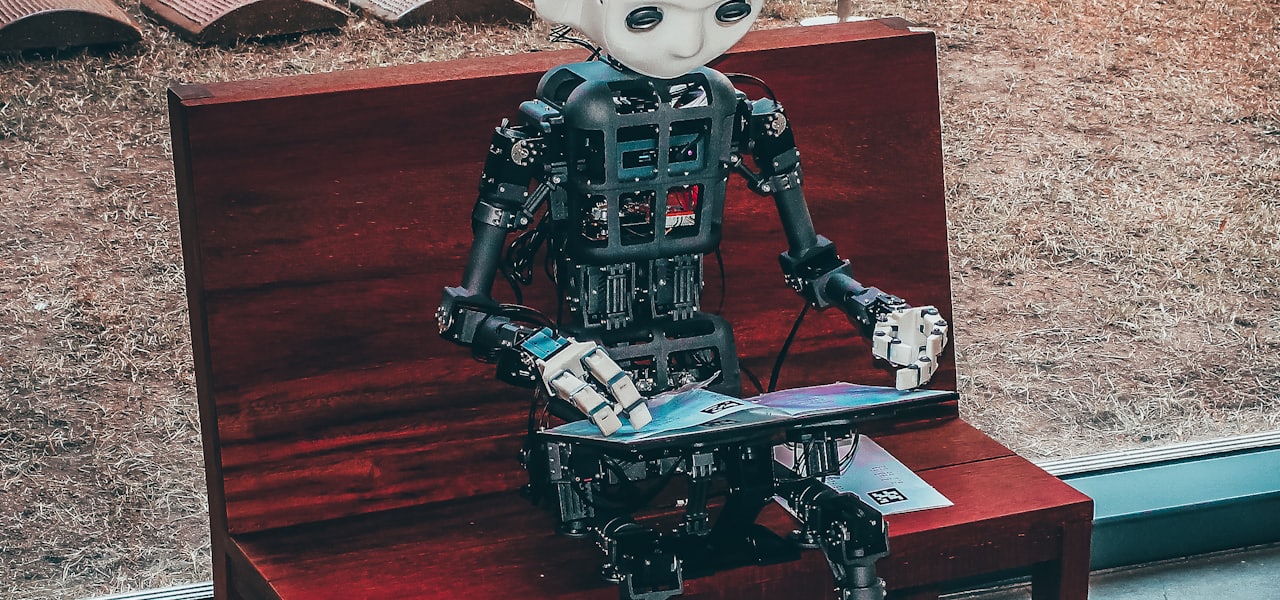
Clanker is a derogatory term for robots and artificial intelligence (AI) software. The term has been used in Star Wars media, first appearing in the franchise's 2005 video game Star Wars: Republic Commando. In 2025, the term became widely used to express hatred or distaste for machines ranging from delivery robots to large language models. This trend has been attributed to anxiety around the negative societal effects of AI. == In science fiction == The term has been previously used in science fiction literature, first appearing in a 1958 article by William Tenn in which he uses it to describe robots from science fiction films like Metropolis. The Star Wars franchise began using the term as a slur against droids in the 2005 video game Star Wars: Republic Commando before being prominently used in the animated series Star Wars: The Clone Wars, which follows a galaxy-wide war between the Galactic Republic's clone troopers and the Confederacy of Independent Systems' battle droids. In Star Wars media, robots—more commonly known as droids—are routinely depicted as the subjects of discrimination. For example, in the original Star Wars film, C-3PO and R2-D2 are abducted by Jawas and sold to the family of Luke Skywalker. When visiting a cantina in Mos Eisley, both droids are refused service by the bartender, who remarks that "We don't serve their kind." In Star Wars lore, the term clanker had entered use by the time of the franchise's High Republic Era and became prominent during the Clone Wars, in which clone troopers regularly use the phrase against battle droids. == AI backlash == The growing popularity of the term clanker reflects an increase in direct contact between people and AI systems. On sidewalks, delivery robots impede mobility and cause safety issues. In digital spaces, cybersecurity experts have raised concerns about the rising number of bots online, which now make up a large portion of internet traffic. A 2025 report estimated that about one in five social media accounts are automated. The term is also a reaction to AI advocacy from industrialists like Elon Musk and Sam Altman, who have championed the integration of AI into nearly every aspect of modern life. This includes efforts by major companies and startups alike, such as Amazon's development of humanoid robots to replace human workers in service industries. Such initiatives have further fueled public skepticism, reinforcing the association of clanker with unease over automation and the displacement of human roles. A global survey conducted by the research firm Gartner in December 2023 found that 64% of customers would prefer companies to avoid using AI in customer service, with another 53% stating they would consider switching to a different company if they discovered AI was handling their service interactions. Another report by Ernst & Young, published in July 2025, found that 42% of employees across Europe are worried that the use of AI in the workplace may threaten their employment. Criticism has also been directed at the technology itself. Some of the backlash stems from concerns about the resource consumption of AI systems, their frequent reliance on copyrighted material without consent, and questions about the intentions of the corporations behind them. There are also concerns about the potential cognitive effects of relying heavily on AI. A study, authored by researchers at Microsoft and Carnegie Mellon University, warns that regular dependence on AI may leave users mentally unprepared for real-world problem solving, likening the effect to cognitive atrophy. In June 2025, United States Senator Ruben Gallego tweeted that his "new bill makes sure you don't have to talk to a clanker if you don't want to", referring to proposed legislation that would require call centers to disclose their use of automated customer service agents to callers in the United States and offer the option to switch to a human representative. == Analysis == Linguist Adam Aleksic has described clanker as an evolution of racial slurs that anthropomorphize robotic systems. Internet memes incorporating the term often reference historical discrimination against marginalized groups such as African Americans. Based on the work of linguist Geoffrey Nunberg, American news website Axios has argued that clanker is merely a derogatory word, rather than a slur, because it does not perpetuate social inequities. NPR has noted the irony that the word robot was coined by Karel Čapek for his 1920 science-fiction play R.U.R. as a similar criticism of industrialization forcing workers to become devoid of their humanity. Aleksic has observed that robot can be further traced to the Proto-Slavic noun orbъ, which means 'slave'. While other science fiction media include pejoratives for androids and robots, such as skinjob and toaster from the Blade Runner and Battlestar Galactica franchises, respectively, clanker is believed to have gained popularity because its usage is intuitive and flexible. Whereas AI slop describes low-quality output from artificial intelligence, clanker belittles the underlying computer systems.
Iron Man 2020 (event)
"Iron Man 2020" is a storyline published by Marvel Comics in 2020 which follows the character Arno Stark as he attempts to take over Stark Industries and the mantle of his estranged brother Tony Stark (Iron Man). The crossover characters of two different brands meeting up in one storyline received mixed reviews from critics. == Publication history == Marvel Comics released the teaser for the event at New York Comic Con in November 2019. It was also alluded to in December 2019's Incoming! In the original checklist released for the event, 2020 Force Works was originally titled Force Works 2020, while 2020 Machine Man was previously named Machine Man 2020, and so on. Additionally, 2020 Wolverine was going to be called Weapon.EXE 2020. The publication of this event was intended to span from January to June 2020, however, due to the COVID-19 pandemic, Diamond Comic Distributors suspended the distribution of new print titles between April 1 and May 27, which also caused digital releases by Marvel Entertainment to be postponed. The rescheduling of the postponed issues to new dates pushed the event's conclusion to August, and certain issues, namely 2020 Force Works #3 and 2020 Ironheart #1–2, were released exclusively in a digital format. == Main plot == Arno Stark wakes up from a nightmare involving the Extinction Entity, a monstrous amalgamation of alien and machine. He dreams that the Extinction Entity is going to come to Earth in a matter of weeks and create an artificial intelligence (A.I.) army to consume humanity. After eating breakfast with duplicates of Howard Stark and Maria Stark, Arno suits up as Iron Man and saves a construction worker from a hostage situation involving several Nick Fury Life Model Decoys, which represent the A.I. army trying to liberate construction robots. Over different news outlets, the media wonders about the whereabouts of Tony Stark, who declared himself as nothing more than a simulation of the real, late Tony Stark. At the A.I. army's base, Machine Man is commanding the robots' moves when Arno appears, having planned for the A.I. army's leader to show himself. Machine Man activates the bomb, forcing Arno to fly it away so it explodes somewhere safe while he escapes. Machine Man reaches the Thirteenth Floor, a dimensional-shunted plane of existence made of solid light, and a haven for robotkind that humans cannot access or comprehend. Aaron meets with the leader of the A.I. army and creator of Thirteenth Floor: Tony Stark -- who is now going by the name Mark One, having embraced his nature as artificial intelligence. Also in the A.I. army are Albert, Awesome Android, H.E.R.B.I.E., Machinesmith, and Quasimodo. The A.I. army continues its efforts to liberate artificial life forms by raiding places where robots are being subjugated. Iron Man intercepts an attack on a Futura Motors testing site by Quasimodo and H.E.R.B.I.E. and manages to recover an Un-Inhibitor allowing him to take control of all A.I.s. On the Thirteenth Floor, Mark One receives a transmission from a mole inside Baintronics -- codenamed Ghost in the Machine --revealing that Arno used the submission code on Jocasta, who received a new body, making her entirely compliant. Stark plans to upload the submission code to the internet to instantly infect robots. With only three hours before the code is transmitted to Stark Unlimited's satellite network, Mark One devises a heist on Bain Tower to tamper with the code before launch. Having discovered the secret behind the Thirteenth Floor, Arno shuts out the A.I. army, uses Jocasta to lure Machine Man away from the tower, infects Machinesmith with the submission code, and confronts Mark One. H.E.R.B.I.E., Awesome Android, and Machinesmith escape from Bain Tower and call for help to every robot in New York City. Mark One is left to fight Iron Man and is defeated. Meanwhile, Sunset Bain confronts and fires Andy Bhang under the accusation of working as a mole inside Stark Unlimited and feeding Bethany Cabe information to relay to the A.I. army. Arno takes Mark One inside Bain Tower to meet Howard and Maria Stark and asks Tony to join him, but he refuses and dismisses his rationale as lunacy. The robotic mob assembled by Machine Man reaches Bain Tower, giving Mark a distraction which allows him to fly off and disable the transmission dish from which Arno intends to broadcast the obedience O.S. to subjugate every robot. Tony manages to stop the upload and make the antenna unusable. In retaliation, Arno fires all of his armor's firepower at Tony as he falls to the ground. Tony Stark's remaining allies escape with his body as Arno attacks the robot protesters. Tony wakes up inside the Thirteenth Floor and is greeted by F.R.I.D.A.Y., who had plucked Tony's consciousness from his body during his fall. In the streets, Arno Stark tracks down Howard and Maria, who die from an illness inherited from Arno. When Sunset Bain objects to Arno creating new bodies for his parents and trying to control people, he reveals she is an A.I., a duplicate of the real Bain whom Arno replaced back when she solicited him to heal a scar on her face. He makes new bodies for Howard and Maria by recreating the Arsenal and Mistress bodies from the eScape. After learning of Arno's new plan, Dr. Shapiro (who is the actual mole) sneaks into a computer and warns F.R.I.D.A.Y. about it. When F.R.I.D.A.Y. relays that only Tony Stark can stop Arno, Tony insists that he is not the real Tony Stark, but is confronted by holographic manifestations of himself in different points of his life, until they all merge into him and he acknowledges that he has always been Tony. As Arno Stark sets off to the Stark Space Station to install his mind-controlling device to enslave all of humanity, Tony Stark's allies assault the Stark Unlimited HQ, confronting Sunset Bain's duplicate and Arno's Iron Legion. Jocasta uploads a submission code to Bain and they place Tony's body inside a bio-pod that restores his body to normalcy, uploads his consciousness back into his body. Using the Thirteenth Floor's access mechanisms, Tony and his allies reach the Stark Space Station from one of the elevators within. Employing his new Virtual Armor, Tony defeats Arno in combat. When Arno prepares to activate his mind-controlling device, the Extinction Entity suddenly appears. Arno ultimately defeats the Extinction Entity by willingly assimilating with it, causing it to explode. The entity is revealed to be a delusion caused by Arno's terminal disease, of which he would die by the end of 2020. Unable to stop Arno, Tony placed him in a simulation where he successfully stopped the entity. Afterwards, Jocasta uses the submission code to force Sunset Bain's duplicate to confess all of Baintronics' crimes, also claiming responsibility for tricking Tony into thinking he was an artificial intelligence and pulling the strings of the A.I. Army, putting an end to the robot revolution. Tony gives up Stark Unlimited to Bhang Robotics and he flies off in a new armor, reasserting himself as Iron Man. == Issues involved == === Main issues === Iron Man 2020 (vol. 2) #1–6 === Tie-In issues === 2020 Force Works #1–3 2020 Iron Age #1 2020 Ironheart #1–2 2020 Machine Man #1–2 2020 Rescue #1–2 2020 iWolverine #1–2 == Critical reception == According to Comic Book Roundup, the entire crossover received an average score of 6.4 out of 10 based on 36 reviews. William Tucker from ButWhyTho Podcast stated "Iron Man 2020 #6 is an initially exciting end to a great event that eventually feels deflated. There is absolutely nothing wrong with the art, Woods has been incredible throughout, but the ending that Slott and Gage chose to round out an epic tale like this left me feeling cold. And while there were loads of enjoyable cameos, their involvement ultimately didn't seem important to the story as a whole. Which is disappointing, as the rest of the event really was a fun and exciting ride." Anthony Wendel from MonkeysFightingRobots wrote "The 2020 event seems like it is taking some big risk, and it doesn't inspire a lot of confidence from the start. Iron Man 2020 #1 has set the stakes and shown some very intense players on both sides of the board. Sadly, if it doesn't unfold just the right way, many may feel cheated about defending the path characters are taking." == Collected editions ==
Blocks world
The blocks world is a planning domain in artificial intelligence. It consists of a set of wooden blocks of various shapes and colors sitting on a table. The goal is to build one or more vertical stacks of blocks. Only one block may be moved at a time: it may either be placed on the table or placed atop another block. Because of this, any blocks that are, at a given time, under another block cannot be moved. Moreover, some kinds of blocks cannot have other blocks stacked on top of them. The simplicity of this toy world lends itself readily to classical symbolic artificial intelligence approaches, in which the world is modeled as a set of abstract symbols which may be reasoned about. == Motivation == Artificial Intelligence can be researched in theory and with practical applications. The problem with most practical applications is that the engineers don't know how to program an AI system. Instead of rejecting the challenge at all the idea is to invent an easy to solve domain which is called a toy problem. Toy problems were invented with the aim to program an AI which can solve it. The blocks world domain is an example of a toy problem. Its major advantage over more realistic AI applications is that many algorithms and software programs are available which can handle the situation. This allows comparing different theories against each other. In its basic form, the blocks world problem consists of cubes of the same size which have all the color black. A mechanical robot arm has to pick and place the cubes. More complicated derivatives of the problem consist of cubes of different sizes, shapes and colors. From an algorithmic perspective, blocks world is an NP-hard search and planning problem. The task is to bring the system from an initial state into a goal state. Automated planning and scheduling problems are usually described in the Planning Domain Definition Language (PDDL) notation which is an AI planning language for symbolic manipulation tasks. If something was formulated in the PDDL notation, it is called a domain. Therefore, the task of stacking blocks is a blocks world domain which stands in contrast to other planning problems like the dock worker robot domain and the monkey and banana problem. == Theses/projects which took place in a blocks world == Terry Winograd's SHRDLU Patrick Winston's Learning Structural Descriptions from Examples and Copy Demo Gerald Jay Sussman's Sussman anomaly Decision problem (Gupta and Nau, 1992): Given a starting Blocks World, an ending Blocks World, and an integer L > 0, is there a way to move the blocks to change the starting position to the ending position with L or less steps? This decision problem is NP-hard.
List of C software and tools
This is a list of software and programming tools for the C programming language, including libraries, debuggers, compilers, integrated development environments (IDEs), and other related development tools and utilities. == Libraries and tools == Adns — asynchronous DNS resolver library Advanced Linux Sound Architecture — API for sound card device drivers Allegro — cross-platform software library for video game development Apache Portable Runtime — Apache web server tool set of APIs that map to the underlying operating system Argon2 — memory-hard password hashing library Berkeley DB — embedded database software library for key/value data Binary File Descriptor library — binary file manipulation library in the GNU toolchain Boehm garbage collector – conservative garbage collector Borland Graphics Interface — graphics library for Borland compilers BSAFE — FIPS 140-2 validated cryptography library Chipmunk — 2D real-time rigid body physics engine C POSIX library — specification of a C standard library for POSIX systems C standard library – standard library for the C programming language Cairo – vector graphics library API for software developers CFD General Notation System (CGNS) — data format and library for computational fluid dynamics cJSON — lightweight JSON parser CLIPS — public-domain software tool for building expert systems Core Audio — low-level API for dealing with sound in Apple's macOS and iOS operating systems Core Foundation — API for macOS and iOS and other Apple operating systems Core Image — GPU accelerated image processing technology for Apple operating systems with Quartz graphics rendering layer. Core Text — text layout and font rendering API for macOS and iOS. Cryptlib — portable cryptography library cURL / libcurl — CLI app for uploading and downloading individual files, such as a URL from a web server over HTTP. DevIL — cross-platform image library for loading and converting file formats DirectFB — graphics acceleration and input device handling library Dld — dynamic loading library Expat — stream-oriented XML 1.0 parser library, written in C99. FFmpeg — multimedia framework for audio/video processing Fontconfig — font customization and configuration library FreeTDS — database library for Sybase and Microsoft SQL Server FreeType — render text onto bitmaps with a font rasterization engine GD Graphics Library — image creation and manipulation library GDK — graphics abstraction layer for GTK GEGL — graph-based image processing framework GIO — I/O and virtual file system library in GLib GLib — utility library providing data structures, event loops, and portability functions. glibc — GNU implementation of the C standard library GLFW — library for OpenGL contexts, windows, and input device handling GNet — networking library for GLib GNU Libtool — Library management tool GNU portability library — collection of portability routines for GNU software GNU Portable Threads — POSIX/ANSI-C based user space thread library for UNIX for scheduling multithreading GNU Readline — command-line editing library GnuTLS — secure communications (TLS/SSL) library GObject — object system library for GNOME GTK — widget toolkit for creating graphical user interfaces GTK Scene Graph Kit (GSK) — scene graph and rendering toolkit for GTK HDF — file format and library for managing large datasets Integrated Performance Primitives — Intel library of optimized multimedia and data processing routines IUP — portable GUI toolkit J2K-Codec — JPEG 2000 image codec JasPer — reference implementation of the codec specified in the JPEG-2000 Part-1 standard LDAP API — API for interacting with Lightweight Directory Access Protocol LZO — lossless compression library Liba52 — decoder for A/52 (AC-3) audio streams libarchive — reading and writing various archive and compression formats Libart — 2D graphics library Libavcodec — codec library from FFmpeg Libavdevice — library for handling multimedia devices Libavfilter — audio and video filter library Libavformat — library for muxing and demuxing multimedia Libpcap — packet capture library Libdca — decoder for DTS audio Libdvdcss — access to encrypted DVD-Video discs libevent — asynchronous event notification callbacks libffi — foreign function interface libfuse — userspace filesystem Libgegl — programming interface to GEGL image processing libgcrypt — cryptography Libgimp — plug-in development library for GIMP Libhybris — compatibility layer for running Android libraries on Linux Libinput — input device library for Wayland and X.Org libjpeg — JPEG image library libLAS — reading and writing geospatial data encoded in the ASPRS laser (LAS) file format libmicrohttpd — small C library for embedding HTTP server functionality Libmpcodecs — media player codec library from MPlayer Libmpdemux — demultiplexing library from MPlayer libpng — PNG image format Libpostproc — video post-processing library from FFmpeg libpq — PostgreSQL client LibreSSL — fork of OpenSSL for TLS Librsb — parallel library for sparse matrix computations Librsvg — SVG rendering library libsndfile — reading and writing audio files libsodium — easy-to-use cryptography library Libswscale — image scaling and colorspace conversion library LibTIFF — TIFF image handling library Libusb — USB device access library Libuv — asynchronous I/O and event loop library LibVLC — media player engine from VLC LibVNCServer — implementation of the VNC server protocol Libvpx — VP8 and VP9 video codec library Libwww — early World Wide Web protocol library from W3C libxml2 — XML parsing Libxslt — XSLT library for the GNOME Project libzip — ZIP archives Lightning Memory-Mapped Database — fast key–value database engine LittleCMS — open-source color management system LZ4 — fast lossless compression algorithm LZFSE — compression library developed by Apple MatrixSSL — lightweight TLS implementation Mbed TLS — portable cryptography and TLS library MediaLib — Sun Microsystems library for multimedia processing Mesa — OpenGL and Vulkan graphics library Microwindows — small windowing system for embedded devices Ming — library for generating SWF (Flash) files Mongoose — embedded web server and networking library Mpg123 — MP3 audio decoding library MPIR — multiple-precision arithmetic library MsQuic — Microsoft implementation of the QUIC transport protocol MuJoCo — physics engine for robotics and control Mustache — logic-less templating library Ncurses — terminal control library Nettle — low-level cryptography library Newt — text-based user interface library Netpbm — graphics conversion and processing library Nghttp2 — implementation of the HTTP/2 protocol Oniguruma — regular expression library Open Asset Import Library — library to import/export 3D model formats OpenCL — parallel computing API/library OpenCV — computer vision OpenGL — API for rendering 2D and 3D vector graphics OpenGL Utility Library — OpenGL utility functions OpenJPEG — JPEG 2000 image codec OpenSSL — SSL and TLS protocols and cryptography library Pango — layout engine library which works with the HarfBuzz shaping engine for displaying multi-language text perf (Linux) — performance analyzing tool PCRE — regular expression library PROJ — library for map projections and coordinate transforms Quartz 2D — 2D graphics rendering API for macOS and iOS platforms, part of the Core Graphics framework. Raylib — simple library for games and multimedia Redland RDF Application Framework — RDF data storage library S2n-tls — TLS implementation from AWS Setcontext — context switching library functions SDL — Simple DirectMedia Layer systemd — system and service manager libraries for Linux Tk — GUI widgets for building graphical user interfaces VDPAU — video decoding acceleration API Vorbis — audio compression codec library VTD-XML — high-performance XML parser Wimlib — library for handling Windows Imaging Format disk images Windows.h — base Windows API header file WolfSSH — lightweight SSH library WolfSSL — lightweight SSL/TLS library X Toolkit Intrinsics — toolkit library for the X Window System x264 — H.264 video codec library XCB — C binding for the X Window System protocol Xft — font rendering library using FreeType Xlib — low-level X Window System API XMDF — eXtensible Model Data Format for scientific data XMLStarlet — XML command-line toolkit zlib — data compression Zopfli — data compression library that performs deflate, gzip and zlib data encoding. Zstd — fast data compression library == Integrated development environments == Anjuta — GNOME IDE CLion — cross-platform commercial IDE from JetBrains Code::Blocks — cross-platform open-source IDE CodeLite — open-source IDE Dev-C++ Eclipse CDT Geany — text editor with IDE features KDevelop — KDE IDE NetBeans Qt Creator SlickEdit Visual Studio Xcode === Online IDEs === CodeSandbox — online IDE primarily for web development with some C support via containers GitHub Codespaces — cloud-based online IDE developed by GitHub Google Cloud Shell — browser-based shell and editor that can comp
Pippit
Pippit (Chinese: 小云雀; pinyin: Xiǎoyúnquè) is an artificial intelligence content creation platform developed by the Chinese technology company ByteDance. The platform, powered by CapCut leverages multimodal AI technology to streamline professional-grade video and image production, specifically targeting small and medium-sized enterprisesand social media creators. == History == In May 2025, ByteDance officially launched Pippit, which is positioned as an AI video and picture creation tool. In early 2026, Pippit underwent a major architectural overhaul with the integration of the Dreamina seedance 2.0. This technical milestone introduced the "Short Drama Agent" functionality, which enables the end-to-end conversion of scripts up to 100,000 words into fully rendered video productions.